Rhome
Property Co-Ownership Platform
End-to-end product design for Rhome, a co-ownership platform where multiple people jointly buy and own one home. We designed both the marketing website that sells an unfamiliar model and the web app that runs the full journey: property listings, PropertyMatch for finding compatible co-buyers, in-app messaging, a co-owner dashboard, and document management.
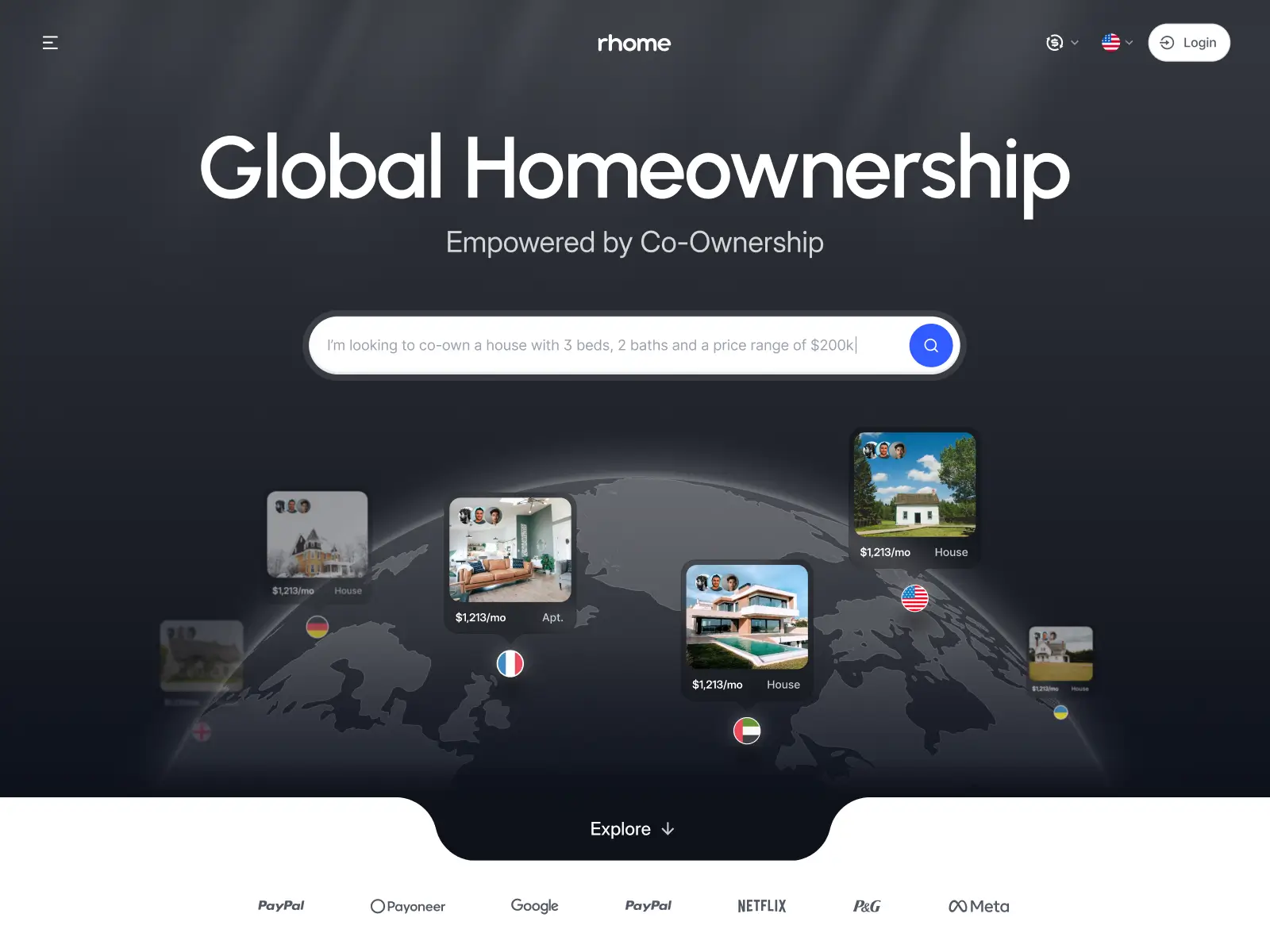
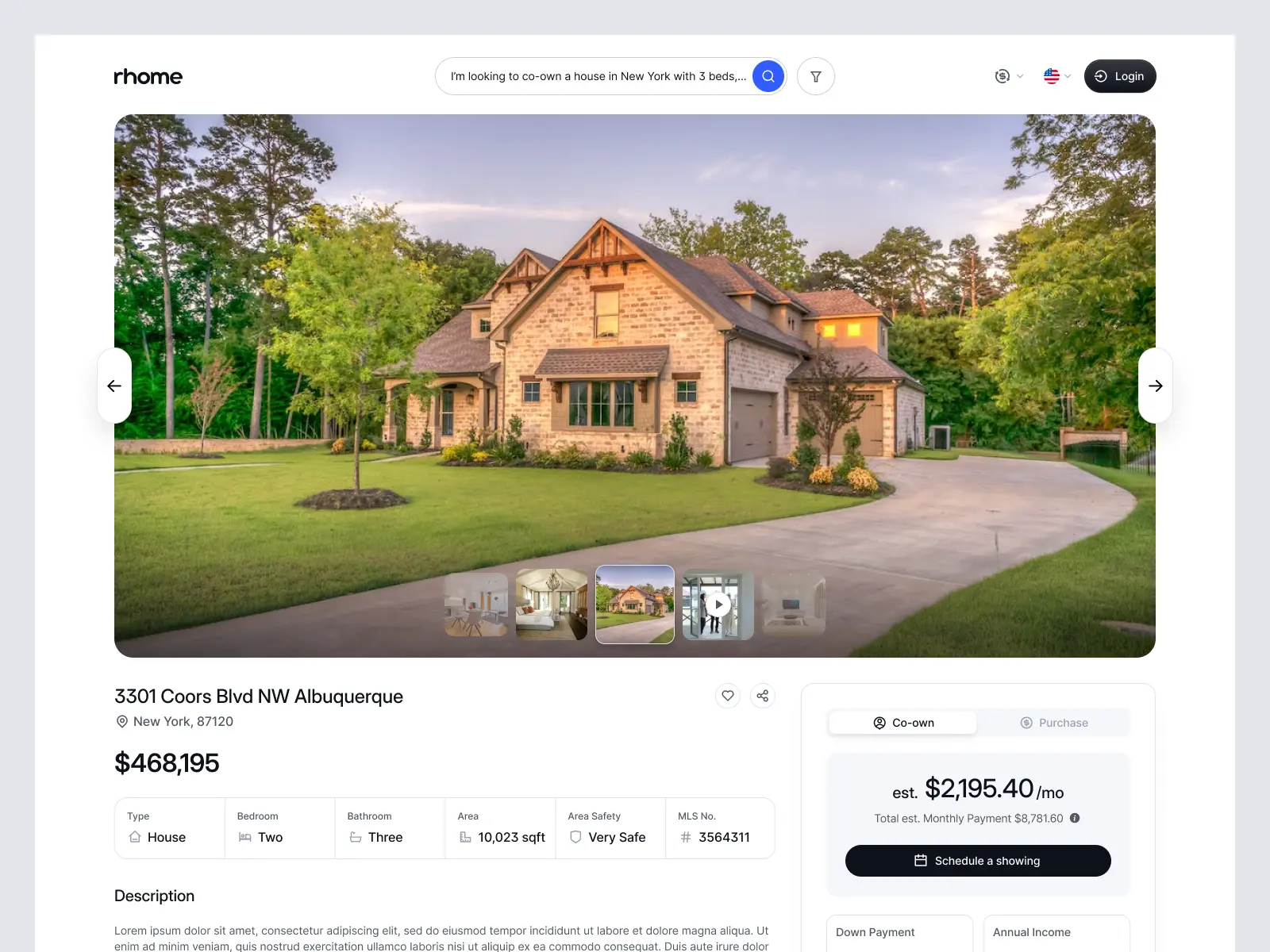
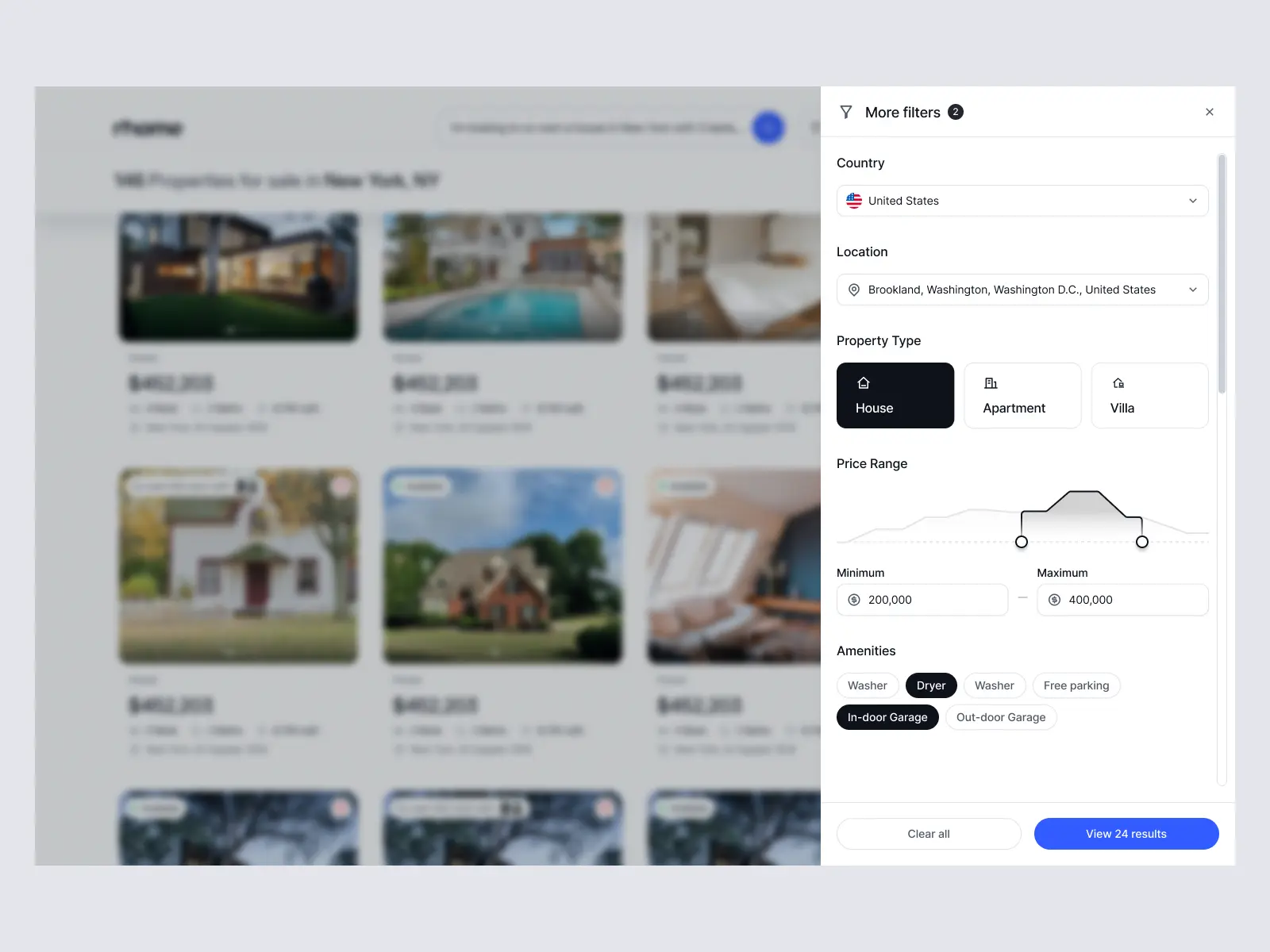
Making co-ownership of a home feel as simple as buying one alone
Rhome is a co-ownership platform: multiple people jointly buy and own a single home, more affordable than buying alone, more permanent than renting. The hard part was never listing properties. It was coordinating several people, often strangers, into one trusted purchase and an ongoing shared-ownership relationship, without it collapsing into confusion over who decides what, who pays what, and what happens next. We designed both halves of the product: the marketing website that sells the concept and the web app that runs the entire co-ownership journey, on one coherent design system.
The website: selling a model people have never seen
Co-ownership is an unfamiliar idea, so the website's first job is comprehension, not conversion. We built a premium marketing site around a single clear promise, global homeownership simplified, and designed every section to answer the question a first-time visitor actually has: how does co-owning a home even work? The message we led with, more affordable than buying, more flexible than renting, frames the model against the two options people already understand. The site is fully responsive across desktop, tablet, and mobile, with a typographic system (Urbanist and Inter Display) that signals trust, because asking someone to co-buy a house is asking for a lot of it.

The web app: where co-ownership actually happens
The product is where the real design challenge lived. A co-ownership journey has more moving parts than a normal purchase: finding the right property, finding the right people to buy it with, agreeing terms, handling documents, and staying coordinated long after the keys change hands. We designed the web app as the single place all of that runs.
Best-in-class property listings
Property discovery with rich listing cards, detailed filters, and map-based browsing, the familiar, polished real-estate experience users expect, so the unfamiliar part (co-ownership) sits on top of something that already feels comfortable.
PropertyMatch
The feature that makes the model possible. Co-ownership requires co-owners, so PropertyMatch pairs prospective co-buyers with each other, helping people find compatible partners to purchase a home with. This is the hardest trust problem in the entire product, and designing it well is the difference between co-ownership feeling viable and feeling risky.
Internal messaging platform
Co-buyers, and the parties around a deal, need to talk constantly. We built messaging directly into the platform so every conversation stays attached to the property and the deal, rather than scattered across email and texts where decisions get lost.
User dashboard
A single control center where a co-owner sees their properties, their co-owners, their documents, and the status of every active deal at a glance. For a process this multi-party, a clear dashboard is what turns potential chaos into something a person can actually feel on top of.
Document management
Shared ownership generates paperwork, agreements, contracts, and records that multiple parties need to access. We designed a system to upload, assign, and organize documents so the right people reach the right files without friction, with a clear trail of who has what.
Why the two-part scope matters
The website convinces someone that co-owning a home is sane and desirable; the web app makes the experience smooth enough to prove the website right. Designing both on one system means there is no jarring shift from the polished marketing promise to the actual product, the trust built on the landing page carries straight into the dashboard. For a startup introducing an unfamiliar model, that continuity is not a nice-to-have, it is the entire reason a hesitant buyer follows through.
%20(1).png)
.webp)
.webp)
Accepted Payments


